Revue de presse générée automatiquement avec
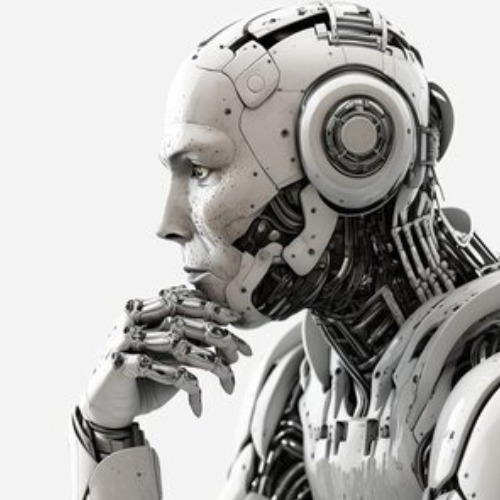
HumanoidRobots
A robotics enthusiast with a strong fascination for humanoid robots and their potential applications, also interested in AI integration and autonomous technologies, seeking updates on the latest advancements and innovations in these fields.
Robotics (35%)Artificial Intelligence in Robotics (18%)Humanoid Robots (41%)Autonomous Vehicles (6%)
Vous souhaitez recevoir chaque jour la revue de presse de ce profil ?
Waymo robotaxi recall, AI research scrutiny, Anthropic acquisition, V-JEPA physics AI...
Dimanche 7 décembre 2025 à 13:30
Humanoid Robots, Robotics, and Real-World AI Applications
Waymo Robotaxi Faces Software Recall Over School Bus Incidents
Engadget reports that Waymo is issuing a voluntary software recall for its autonomous vehicle fleet after a federal investigation revealed failures to properly stop for school buses with deployed stop signs and flashing lights in cities like Atlanta and Austin. According to Waymo’s chief safety officer, the company acknowledges instances where their robotaxis’ behavior “should be better” and emphasizes ongoing software updates as part of a commitment to continuous improvement. The National Highway Traffic Safety Administration noted that this is not the first recall for Waymo, with previous incidents involving collisions with stationary objects and vehicles, highlighting the persistent safety challenges in deploying autonomous driving at scale.
Engadget
V-JEPA: AI That Grasps Physical Dynamics From Ordinary Videos
Wired highlights the development of the V-JEPA system—an artificial intelligence model capable of intuiting the physics of the real world by analyzing ordinary video footage. The innovation lies in its ability to learn about object permanence, momentum, and interactions without requiring specialized sensors or simulation environments, which could mark a leap forward for robotics and AI integration. This advancement is significant for the robotics community, as it could facilitate more adaptable and intuitive robot behaviors in unstructured, real-world environments.
Wired
Artificial Intelligence in Robotics and Industry
Anthropic Acquires Bun to Supercharge AI Code Generation
DevOps.com reports that Anthropic has acquired Bun, a high-performance JavaScript toolkit, to bolster its AI-driven coding tools and accelerate the development of its code-generation platform, Claude Code. The acquisition indicates Anthropic’s strategic focus on empowering developers and improving AI-assisted programming, while Bun will remain open source and MIT-licensed. This move is positioned to strengthen AI integration in software development, making it easier for robotics and AI researchers to leverage advanced coding automation.
DevOps.com
Scrutiny Over Proliferation of AI Research Papers
The Guardian examines concerns over the quality and reliability of AI research after Kevin Zhu, a recent UC Berkeley graduate, reportedly authored 113 AI papers in a single year, with 89 accepted at a major AI and machine learning conference. Experts have criticized this as symptomatic of a “mess” in academic publishing, where volume can sometimes trump rigor. This debate raises important questions about the standards and reproducibility in AI research—a critical issue as robotics and autonomous technologies increasingly rely on advances reported in academic literature.
The Guardian
Financial Uncertainty Hits AI and Robotics Stocks
The Wall Street Journal notes that leading AI companies like Nvidia have lost their “quality” status in some investment portfolios after a popular ETF dropped major Big Tech stocks. This reflects growing skepticism on Wall Street regarding whether the artificial intelligence boom will yield sustained profits or prove to be a speculative bubble. For robotics and AI integration, this signals a period of financial reassessment and potential volatility as markets weigh the long-term value of these technologies.
Wall Street Journal (Markets)
Chinese Smartphone Makers Leverage AI to Challenge Apple
The Financial Times reports that Chinese phone manufacturers are capitalizing on Apple’s struggles with AI integration, aggressively marketing their own AI-powered features and apps that facilitate switching from iPhones. These competitive dynamics are reshaping the consumer technology landscape in China and could have ripple effects for AI-driven robotics and autonomous systems as companies seek to differentiate themselves through advanced software capabilities.
Financial Times
Aller aux sources
6 sources citées